



 Seeds
SeedsAnnual aromatic herb, perennial in warm climates. Its leaves are used in cooking both fresh and dried.
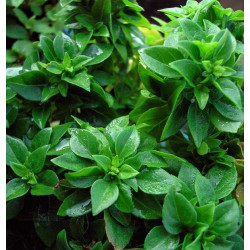
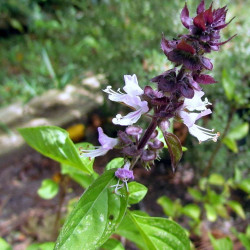
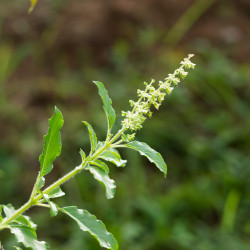
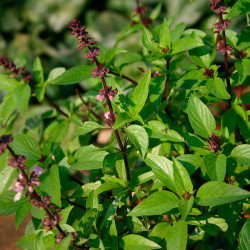
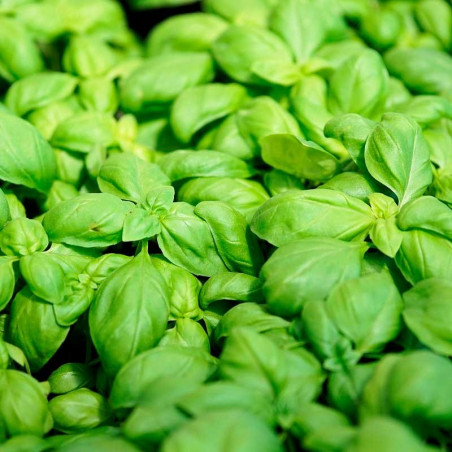
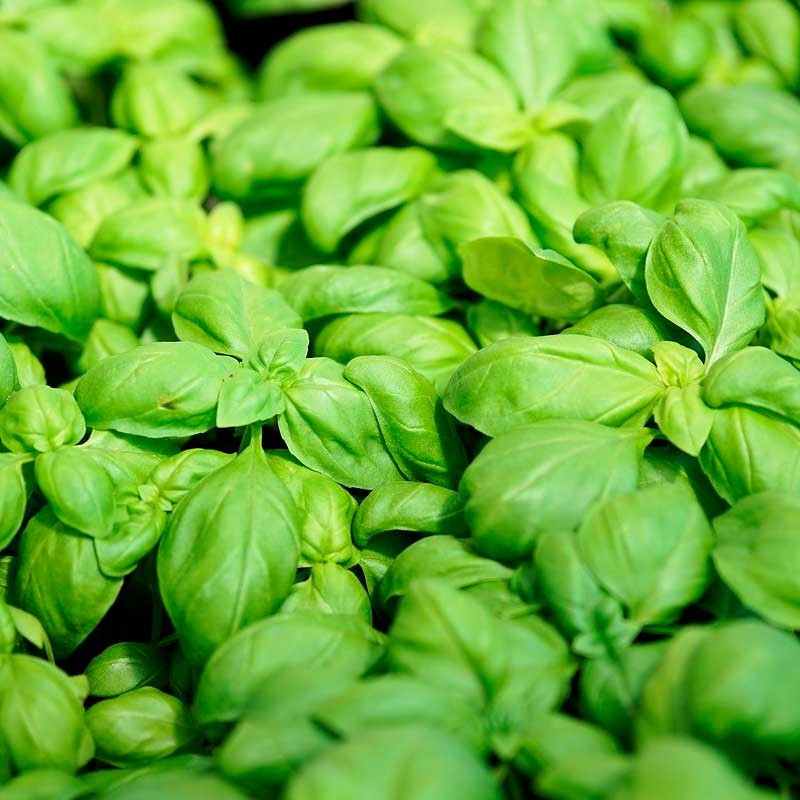
This basil variety, also known as Genovese basil, has dark green, ovate, silky-textured leaves that are large, long, and wide. The aromatic flowers are white or pink and arranged in spikes.
Basil seeds generally germinate quickly. Sow them directly in seed trays or individual pots. Optionally, soak the seeds in lukewarm water for a few hours to speed up hydration.
Use a suitable seed-starting substrate, scatter the seeds on the surface, and cover with a thin layer about the thickness of the seed. Mist the substrate with water and keep the surface consistently moist.
Place the containers in a location around 20 °C, or outdoors if winter frosts have passed. Avoid direct sunlight until the seedlings have at least a pair of true leaves (those that appear after the cotyledons), but ensure they receive plenty of light.
A clear plastic film can help maintain temperature and humidity and protect against pests; however, it must be ventilated daily to prevent fungal growth. Transplant seedlings into individual pots when they are large enough to handle.
If planting outdoors, protect young plants. Basil is a good companion for tomatoes, but not for rue or sage. It helps reduce insect pest problems for other garden plants. The composition of basil essential oil varies depending on the region where it is grown.

| January | February | March | April | May | June | July | August | September | October | November | December |
Data sheet
You might also like
No customer questions for the moment.
Annual aromatic herb, perennial in warm climates. Its leaves are used in cooking both fresh and dried.
This basil variety, also known as Genovese basil, has dark green, ovate, silky-textured leaves that are large, long, and wide. The aromatic flowers are white or pink and arranged in spikes.
 Add to basket