



 Seeds
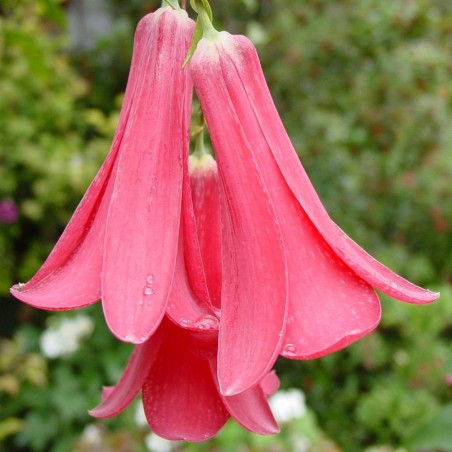
SeedsEvergreen climbing plant with elegant bell-shaped pink or red flowers, the national flower of Chile and prized for its ornamental beauty.
Lapageria rosea, commonly known as copihue, is a perennial climbing plant native to the temperate rainforests of southern Chile. It produces graceful, hanging bell-shaped flowers ranging from soft pink to deep red, along with glossy dark-green foliage. It prefers cool, humid, and shaded environments, making it ideal for temperate gardens or as an indoor ornamental in warmer climates. Growth is slow but steady, and it needs support to climb. This emblematic species is highly appreciated for its natural elegance and charm.
To germinate Lapageria rosea, start by soaking the seeds in lukewarm water for about 72 hours, changing the water at least once a day. Then, plant them in a light, nutrient-rich substrate, such as seed and cutting compost. Keep the soil moist, but avoid waterlogging. The optimal temperature for germination is around 20 °C during the day and about 13 °C at night. Stored seeds require stratification. Soak them in lukewarm water for 3 days, changing the water 3 to 5 times a day, then stratify them for 1 to 3 months at 4 °C. Germination is slow and can be irregular, but as long as the seeds remain firm, they can still sprout. In some cases, this process may take more than five months.

| January | February | March | April | May | June | July | August | September | October | November | December |
Data sheet
No customer questions for the moment.
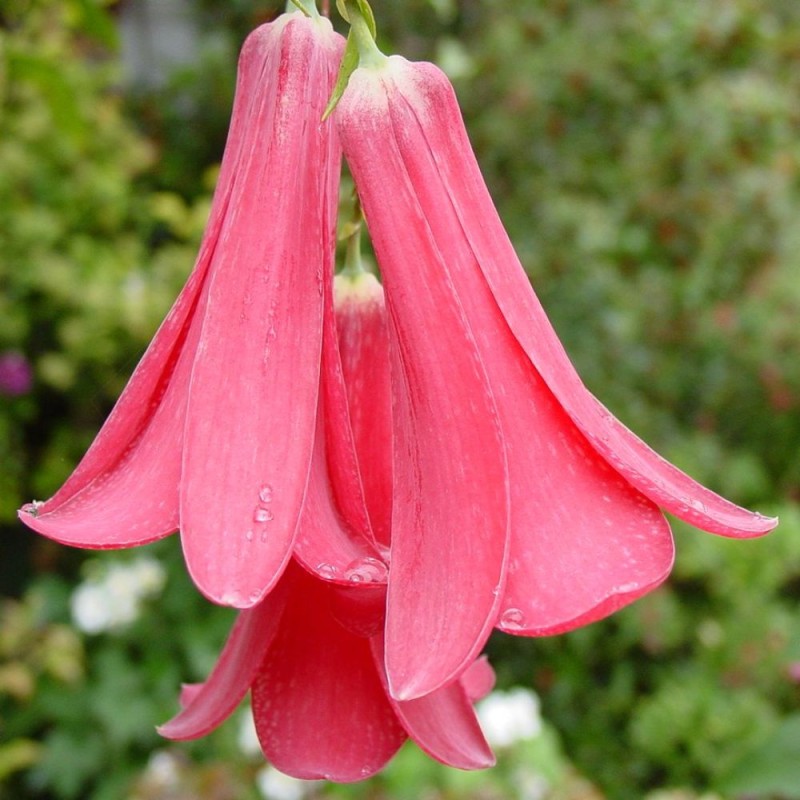
Evergreen climbing plant with elegant bell-shaped pink or red flowers, the national flower of Chile and prized for its ornamental beauty.
 Add to basket