



 Seeds
SeedsFast-growing deciduous tree, highly resistant and adaptable, valued for its dense shade, hardiness, and ability to thrive in dry or cold climates.
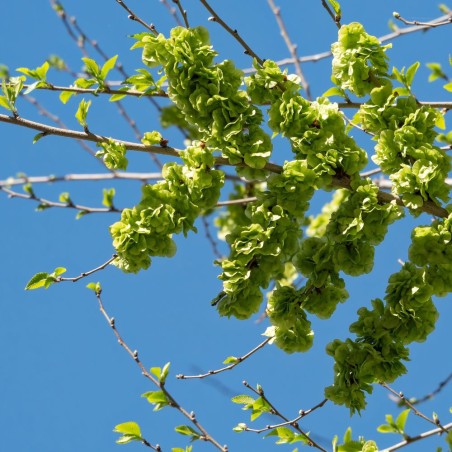
Ulmus pumila, commonly known as the Siberian elm, is a tree native to Central and Eastern Asia. It grows between 10 and 20 meters tall, forming a broad, irregular crown with small, dark-green leaves that turn yellow in autumn. This species is extremely tough, tolerating drought, frost, and poor soils. Its rapid growth makes it suitable for windbreaks, roadside planting, or providing shade in a short time. Although very hardy, it benefits from regular pruning to maintain shape and vigor.
Ulmus pumila seeds should be sown fresh, as they lose viability quickly. They do not require any special treatment, though a short cold stratification of 2 to 4 weeks can improve results. Sow them shallowly in a moist, well-drained substrate and keep the temperature between 18 °C and 25 °C. Germination is usually fast, occurring within one to two weeks. Once sprouted, seedlings should be kept in a bright, sheltered spot, avoiding excessive moisture.

| January | February | March | April | May | June | July | August | September | October | November | December |
Data sheet
No customer questions for the moment.
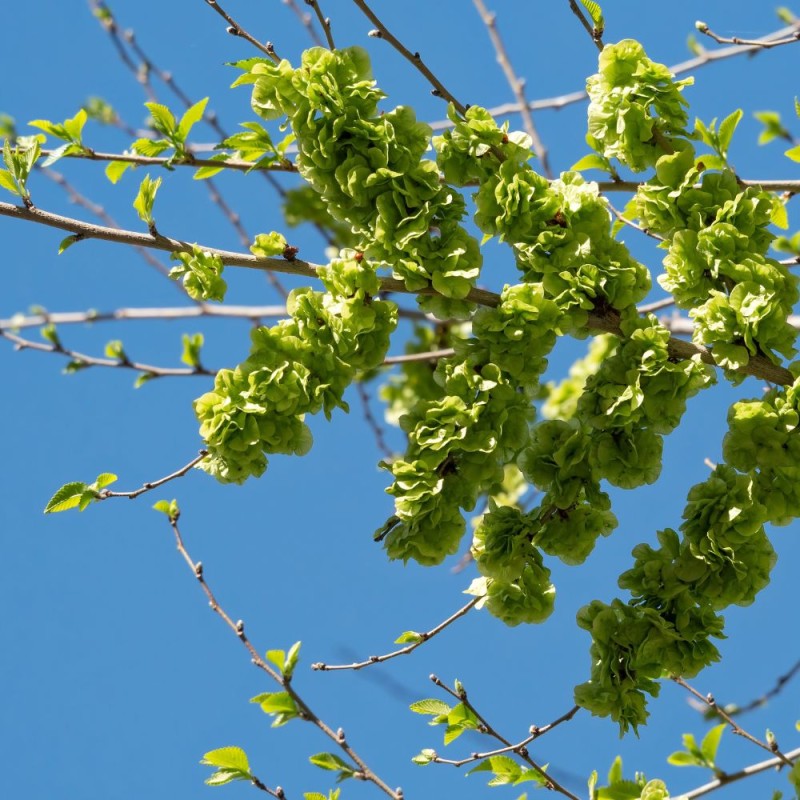
Fast-growing deciduous tree, highly resistant and adaptable, valued for its dense shade, hardiness, and ability to thrive in dry or cold climates.
 Add to basket