



 Seeds
SeedsAromatic subshrub native to the Mediterranean region and widely cultivated worldwide. Used as a spice or seasoning in cooking and also valued for its medicinal properties, particularly those related to digestion.
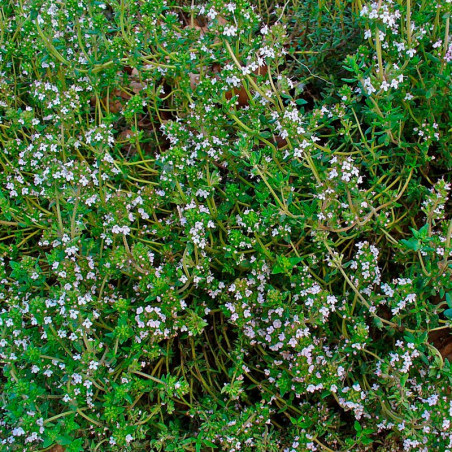
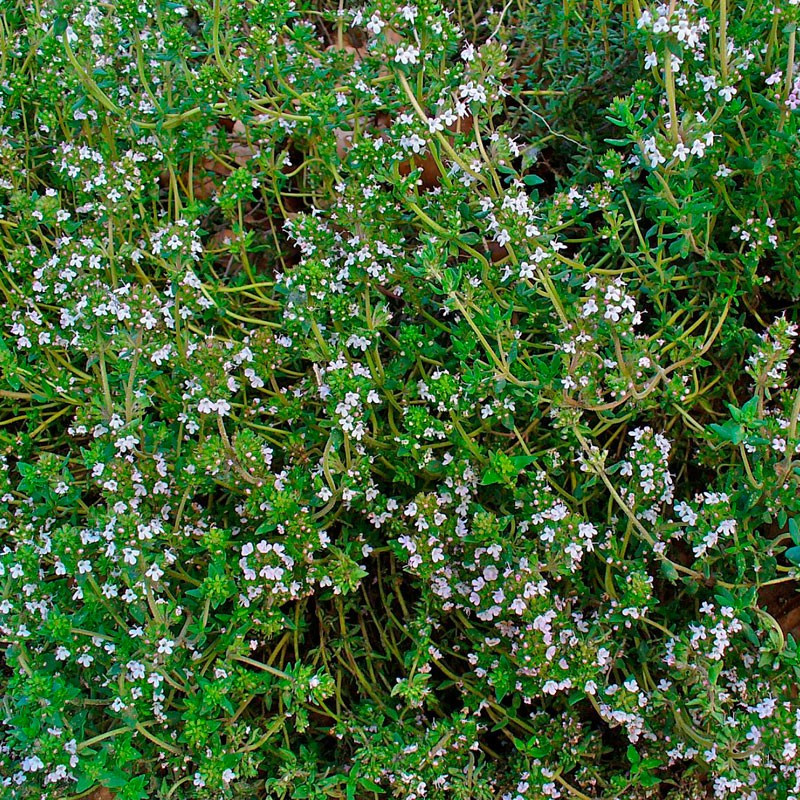
Thymus vulgaris, known as common thyme, is a low-growing perennial shrub that forms compact clumps with woody stems and small, narrow, gray-green leaves. In summer it produces small lilac or white flowers in terminal clusters, which are highly attractive to bees and other pollinators.
It is widely used in Mediterranean cuisine to season stews, meats, soups, and sauces. Its aromatic foliage and hardiness also make it an excellent ornamental plant for borders, herb gardens, and flower beds. It tolerates dry, well-drained soil and full sun, requiring little maintenance while remaining very rustic.
To germinate thyme seeds, prepare a light, well-drained substrate. Scatter the seeds on the surface, pressing gently without covering too deeply, as they require light to germinate. Keep the substrate slightly moist and place the tray in a warm, bright location. Germination may take 14-28 days.
Once seedlings have several true leaves, transplant them 20-25 cm apart. The plant grows slowly at first but eventually forms compact, aromatic clumps.
| January | February | March | April | May | June | July | August | September | October | November | December |
Data sheet
No customer questions for the moment.
Aromatic subshrub native to the Mediterranean region and widely cultivated worldwide. Used as a spice or seasoning in cooking and also valued for its medicinal properties, particularly those related to digestion.
 Add to basket